IETM – Interactive Electronic Technical Manual
As industries become increasingly digital, organizations are replacing bulky paper manuals with intelligent, interactive documentation. One of the most important advancements in technical documentation is the Interactive Electronic Technical Manual (IETM). Designed to improve maintenance, troubleshooting, training, and lifecycle support, IETMs have become the preferred documentation standard for defence, aerospace, manufacturing, transportation, and many other engineering-intensive industries.
What is an IETM?
An Interactive Electronic Technical Manual (IETM) is a digital technical publication that provides maintenance procedures, operating instructions, troubleshooting guides, spare parts information, and multimedia content through an interactive interface rather than static printed documents.
Unlike traditional PDF manuals, an IETM allows users to search information instantly, navigate through hyperlinks, watch instructional videos, zoom into engineering diagrams, and even interact with maintenance workflows.
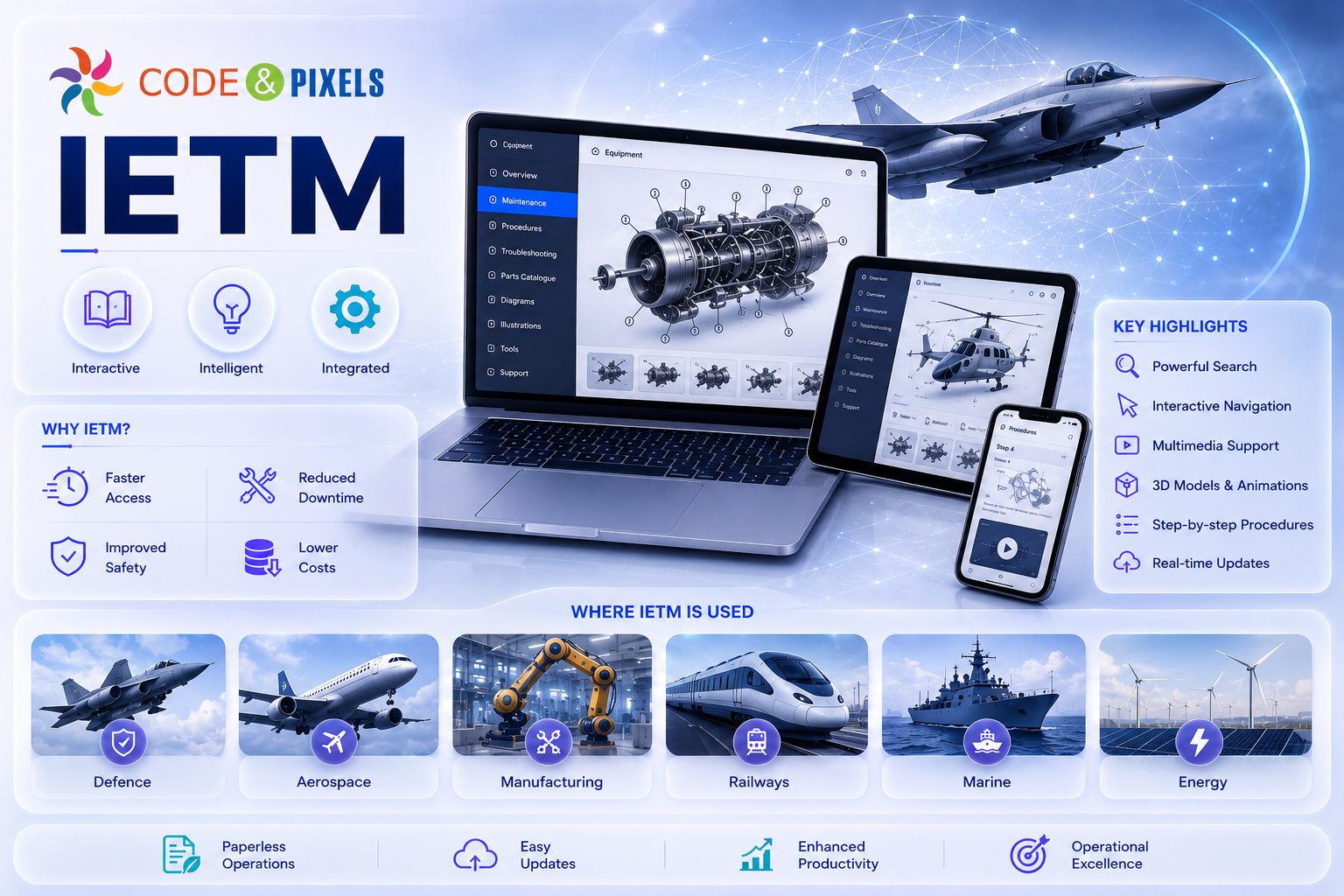
Why Do Industries Need IETM?
Technical equipment continues to become more sophisticated. Managing thousands of pages of documentation in printed manuals is time-consuming, expensive, and prone to human error.
- Instant access to technical information
- Reduced maintenance downtime
- Faster troubleshooting
- Improved technician productivity
- Lower documentation costs
- Real-time document updates
- Enhanced operational safety
- Paperless documentation management
Where are IETMs Used?
Defence
Military vehicles, missile systems, aircraft, naval platforms, communication equipment, radar systems, and weapon systems require accurate and continuously updated maintenance documentation.
Aerospace
Aircraft manufacturers and MRO organizations rely on digital manuals for inspections, repairs, servicing, and component replacement.
Manufacturing
Industrial machinery, CNC equipment, robotics, production systems, and automation platforms benefit from interactive maintenance documentation.
Railways
Rail operators use IETMs for rolling stock maintenance, signalling systems, and infrastructure servicing.
Marine
Commercial ships, offshore platforms, and naval vessels require centralized documentation for onboard systems.
Energy
Power plants, renewable energy installations, oil & gas facilities, and industrial plants use digital technical manuals for maintenance and compliance.
Key Features of an IETM
- Powerful full-text search
- Interactive navigation
- Hyperlinked content
- Embedded images and illustrations
- 3D models and animations
- Training videos
- Step-by-step maintenance procedures
- Fault isolation guides
- Interactive spare parts catalogues
- Revision management
- User access control
- Cross-referencing
- Offline and online operation
- Standards compliance
Benefits of IETM
| Traditional Manuals | IETM |
|---|---|
| Thousands of printed pages | Digital interactive documentation |
| Manual searching | Instant search |
| Difficult updates | Easy digital revisions |
| Heavy paper manuals | Portable electronic access |
| Static illustrations | Interactive multimedia |
| Limited navigation | Hyperlinks and smart navigation |
| Higher printing costs | Reduced lifecycle costs |
How Does an IETM Work?
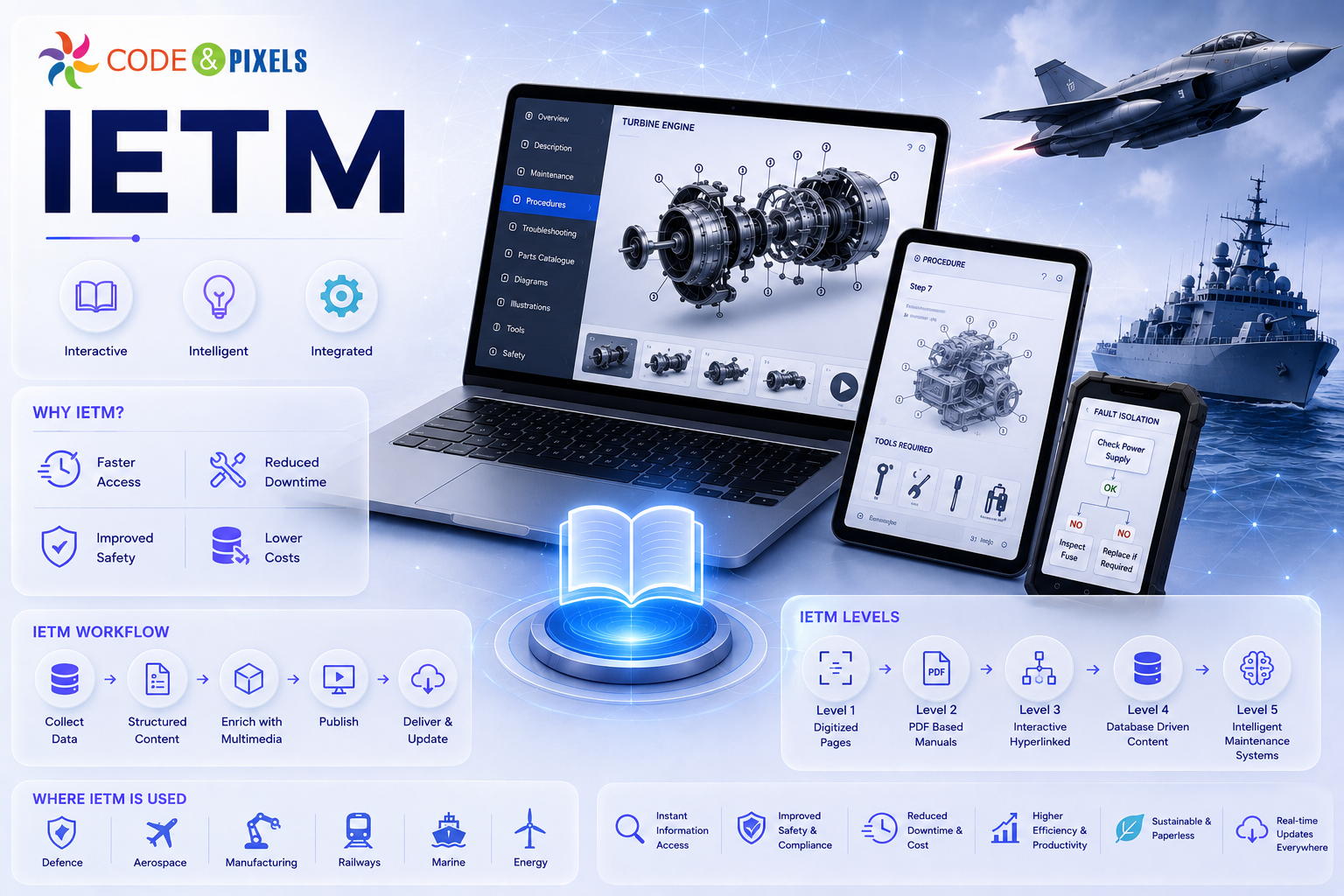
- Technical data is collected from engineering teams.
- Content is structured into modular information units.
- Procedures are linked with graphics, multimedia, and parts information.
- The content is published into an interactive viewing environment.
- Users access information through desktops, tablets, or rugged devices.
- Updates are distributed digitally without reprinting manuals.
Common Standards Used in IETM
- JSG 0852
- S1000D
- MIL Standards
- AECMA Specifications
- ATA Documentation Standards
- Defence procurement guidelines
Different Levels of IETM
| Level | Description |
|---|---|
| Level 1 | Digitized page images |
| Level 2 | PDF-based electronic manuals |
| Level 3 | Interactive hyperlinked documentation |
| Level 4 | Database-driven dynamic technical publications |
| Level 5 | Fully integrated intelligent maintenance systems |
Who Uses IETMs?
- Maintenance engineers
- Service technicians
- Military personnel
- Aircraft maintenance teams
- Manufacturing engineers
- Field service engineers
- Technical trainers
- Operations teams
- Equipment manufacturers
Future of IETM
Modern IETMs continue to evolve with emerging technologies such as Artificial Intelligence, predictive maintenance, IoT connectivity, augmented reality, digital twins, cloud platforms, and real-time analytics. Future systems will become increasingly intelligent, automatically guiding technicians through diagnostics, recommending corrective actions, and integrating directly with enterprise maintenance systems.
Frequently Asked Questions
What is an Interactive Electronic Technical Manual (IETM)?
An Interactive Electronic Technical Manual (IETM) is a digital, database-driven technical manual that provides interactive access to maintenance procedures, troubleshooting guides, spare parts information, multimedia content, and technical documentation. It enables users to quickly search, navigate, and access information through an intuitive interface.
What is JSG 0852?
JSG 0852 is the Indian defence standard for Interactive Electronic Technical Manuals (IETMs). It specifies the functional, security, usability, and performance requirements for developing and delivering electronic technical manuals used by defence organizations.
What are the benefits of IETM software?
IETM software improves maintenance efficiency by providing fast information retrieval, interactive navigation, multimedia integration, hyperlinking, searchable content, reduced paper documentation, simplified updates, and improved accuracy during maintenance operations.
Which industries benefit from IETM software?
IETM software is beneficial for defence, aerospace, aviation, marine, railways, oil and gas, manufacturing, heavy engineering, medical equipment, telecommunications, and industrial maintenance where technical documentation must be accurate, searchable, and easy to update.
Conclusion
Interactive Electronic Technical Manuals have transformed technical documentation from static printed books into intelligent digital knowledge systems. By improving accessibility, reducing maintenance time, supporting multimedia, and simplifying updates, IETMs help organizations enhance productivity while lowering operational costs. As industries continue their digital transformation, IETMs are becoming an essential component of modern asset lifecycle management and technical support.