How a Digital Language Lab Builds Soft Skills That Grammar Classes Never Could
Every parent wants their child to speak English with confidence. Every student wants to walk into a job interview and not freeze.
But here is the uncomfortable truth that most schools have yet to accept: years of grammar drills, textbook exercises, and vocabulary tests are not producing confident communicators. They are producing students who know the rules but cannot play the game.
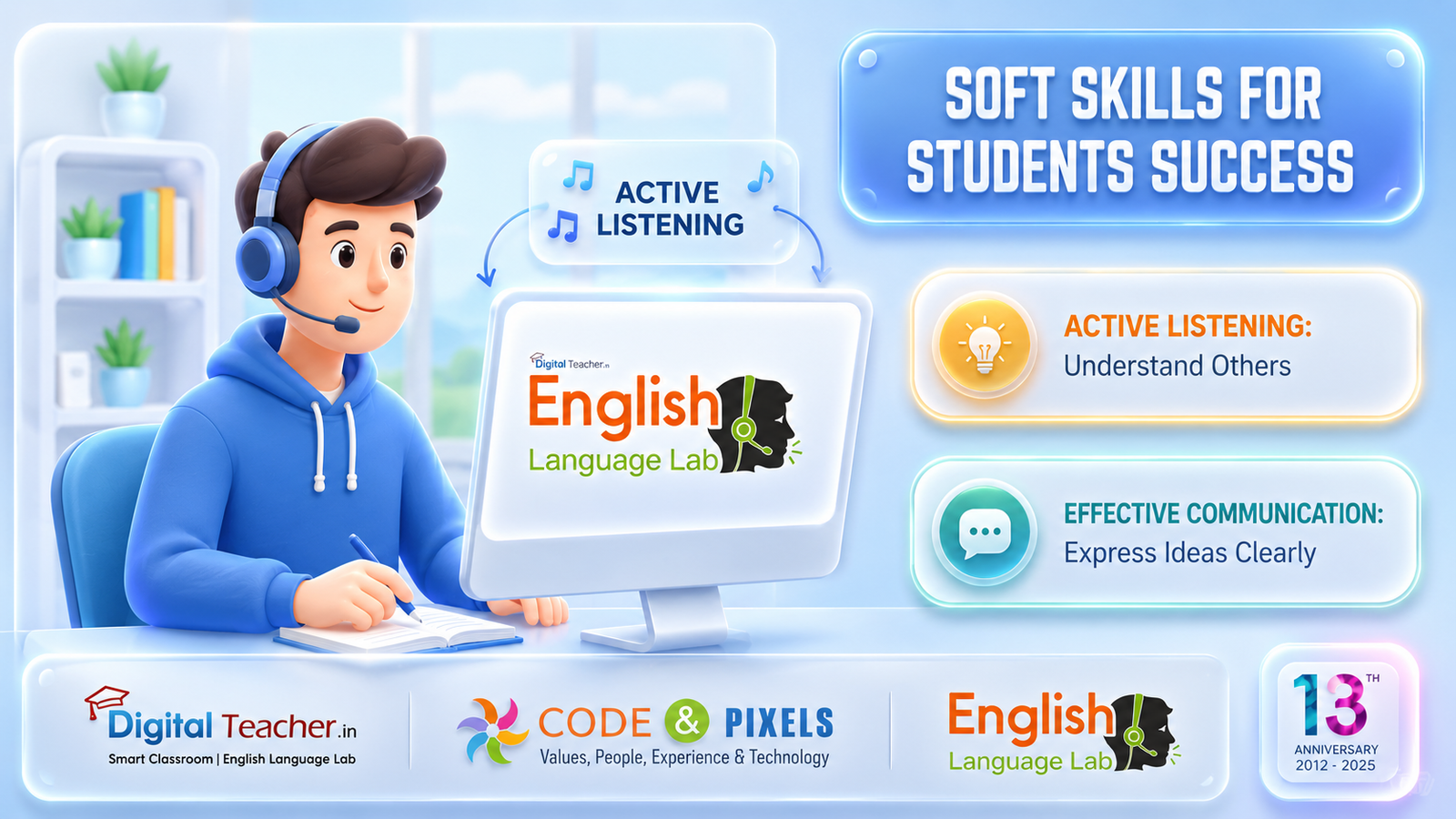
The game, in this case, is real communication. And to play it well, students need Digital Language Lab Soft Skills—a combination of speaking confidence, listening ability, pronunciation clarity, and the courage to express themselves without waiting for permission to be perfect.
What Grammar Classes Miss
Traditional English classrooms are built around accuracy. Teachers correct mistakes, students memorize patterns, and exams reward the student who can identify errors in a sentence.
However, none of these activities prepare a student for a group discussion, a client presentation, or a spontaneous conversation with a colleague.
Real world communication is messy, fast, and unforgiving. It rewards clarity, confidence, and the ability to listen and respond—not just the ability to conjugate verbs correctly. This is precisely the gap that English Language Lab Software in Soft Skills Development is designed to fill.
The Language Lab Environment
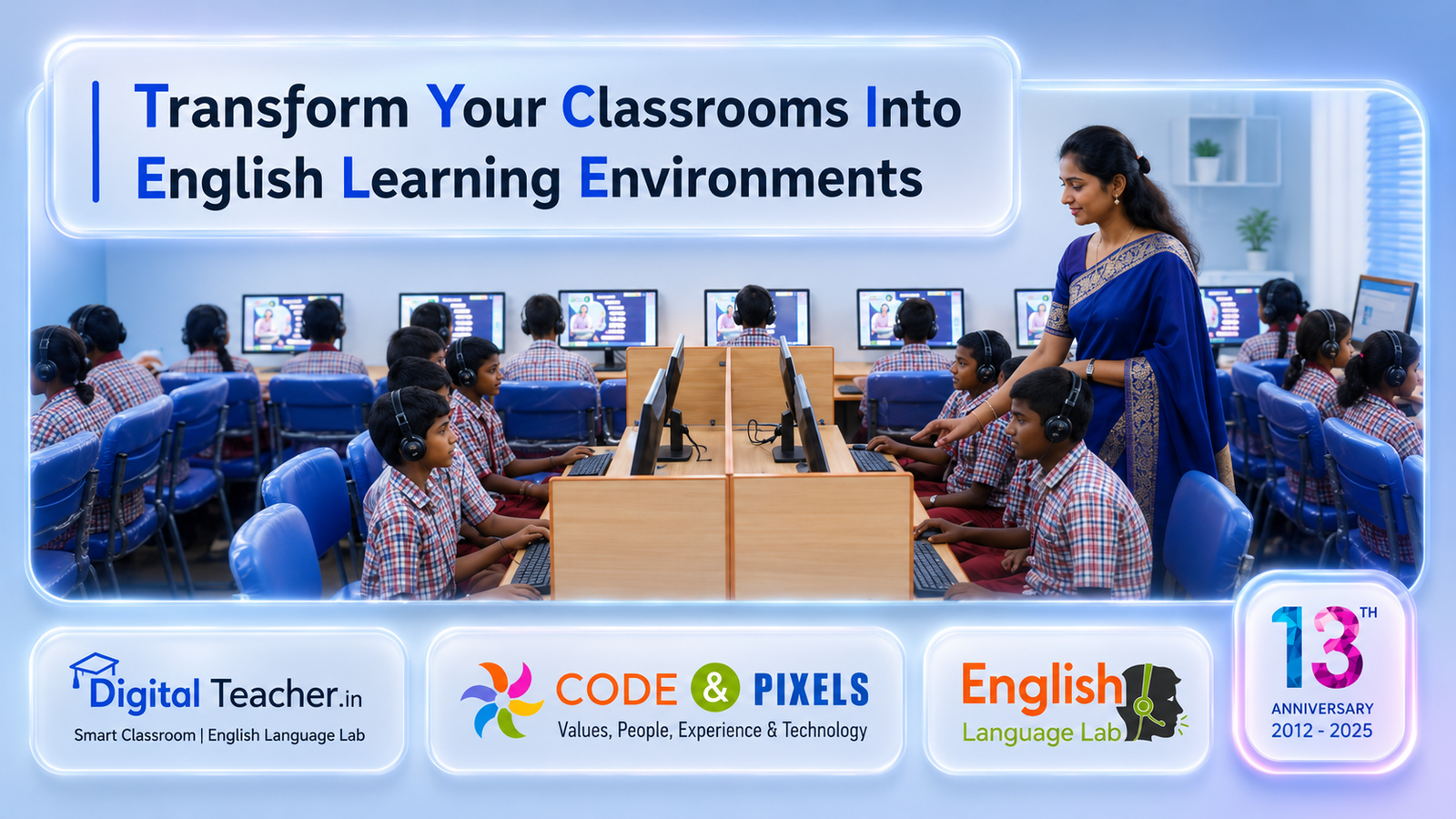
A Digital Teacher English Language Lab is not simply a room with computers. It is a structured learning environment where students use headsets, microphones, and purpose-built software to practice speaking, listening, and interaction at their own pace and without fear of being judged by thirty classmates.
Inside the lab, students engage in pronunciation drills, comprehension exercises, role play scenarios, and guided conversation practice.
Over time, these structured repetitions build the very soft skills that employers consistently list as their top hiring criteria: communication, confidence, and the ability to collaborate.
Why Safety Accelerates Learning
One of the most underappreciated features of a Digital Language Lab is the psychological safety it creates. When a student knows that their practice is private—heard only by their headset and monitored by a teacher who is there to guide, not judge—they take risks.
They attempt words they would otherwise avoid. They speak in longer sentences. They stop waiting to be called on and start actually practicing.
“This shift from passive classroom observer to active English communicator is where real growth happens.”
English Language Lab Software in Soft Skills Development creates this environment by design, giving every student individual practice time that a forty-minute group lesson simply cannot provide.
Soft Skills Cannot Be Automated
With AI tools handling grammar correction, translation, and even writing, some educators wonder whether soft skills training is still necessary. The answer is an emphatic yes.
Persuasion, empathy, interpersonal clarity, and the ability to read a room are irreducibly human capabilities.
The Digital Teacher English Language Lab trains these capabilities through repeated human-centered practice—something no chatbot can replicate.
The Outcome That Matters
Institutions using structured language lab programs consistently report the same outcomes: students speak more willingly, their pronunciation improves noticeably, and they enter professional situations with measurably higher confidence.
For students, this translates into better interview performance, stronger team participation, and a genuine readiness for the workplace.
Grammar will always matter. But grammar alone has never built a confident communicator.
The Digital Language Lab bridges that gap—and for today’s students, that bridge is the most important one they will ever cross.